Posts

Diamond core bit drilling tips & trouble shooting A

Image
Always secure the drill rig either with a mechanical anchor, vacuum system or by use of the jack screw. NEVER stand on the base and drill without anchoring. Level the drill rig by use of the base leveling screws, and a small level attached to the column permanently or by a magnetic strip on the level. This procedure will ensure a perpendicular hole. Never let the bit spin in the hole without applied pressure. This will cause the diamonds to round off and the bit segments will heat and glaze over. Turn on water before starting the drill motor. Otherwise, the water jacket seals heat up and become brittle, losing water. When your bit encounters steel (rebar), relax pressure about 1/3 and allow the bit to cut at its own rate. DO NOT PUSH THE BIT. Some operators turn the water down after exiting the steel to sharpen the bit. If you engage in this practice, turn the water back up once the bit is sharpened. When drilling high PSI concrete or concrete with very hard aggregate (i.e., ri...

Diamond Blade Performance- Concrete cutting D

Image
Moh’s Range                       Description                                  Aggregates 8-9                                     Citically Hard                               Flint, chert, trap rock, basalt 6-7                              ...

Diamond Blade Performance – Concrete Cutting B

Image
Compressive Strength Concrete slabs may vary greatly in compressive strength, measured in pounds per square inch (PSI). Most concrete roads are 4,000-6,000 PSI, while typical patios or sidewalks are about 3,000 PSI. Concrete Hardness PSI Critically hard                 8,000 or more Hard                                      5,000 – 8,000 Medium                                 4,000 – 6,000 Soft                                      3,000 or less concrete ...

Diamond Blade Performance – Concrete Cutting C

Image
Size of the Aggregate The size of aggregate affects diamond blade performance. Large aggregates tend to make a diamond blade cut faster. The most common sizes of aggregate are: Pea Gravel………..                                       Variable in size,  or less in diameter ¾”…………………….. usually 3/8”                                                      Sieved size 1-1/2”……………….                         ...

Diamond blade Trouble Shooting Uneven Segment Wear

Image
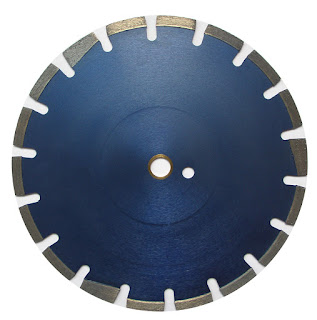
Symptom:Uneven Diamond Segment Wear Cause: a.  Diamond Segments are worn on one side, reducing side, reducing side clearance. It is usually caused by misalignment of the saw or a lack of sufficient water on both sides of the diamond blade .            b .  Diamond Blade is worn out-of-round due to bad bearings, worn arbor or excessive dulling condition. See section on excessive wear. Remedy: a.Check saw alignment. Clean water system, making certain that water is properly applied to the leading edge of the blade flanges. Check to see if pump is supplying sufficient, even water.              b.Replace bearings or worn arbor as required Turbo segmented diamond blade

Diamond Blade Performance – Concrete Cutting A

Image
Factors Involving Concrete When cutting concrete , several factors influence your choice of diamond blades . Compressive strength Steel reinforcing (rebar) Hardness of the aggregate Green or cured concrete Size of the aggregate Abrasivity of the aggregate Type of sand The guidelines in this section are for general reference only. Your best source for information on the characteristics of the concrete you have to cut is from the original contractor. Contact your local Department of Transportation or City Hall for help in finding this information.   To be continued laser welded turbo diamond blade

Diamond Trouble shooting Undercutting

Image
Symptom:Undercutting Cause:Undercutting is a condition in which the steel center wears faster than the diamond segment, especially in the areas where the diamond segment and core are joined. The condition is caused by highly abrasive material grinding against the blade during the sawing operation. Usually materials containing sand are responsible for this condition, called segment loss. Remedy:The flow of swarf (abrasive cuttings) must be distributed over a wider area, away from the critical segment area with undercut retardant diamond segments or other types of undercut protectors specially positioned around the steel center to change the pattern of constant abrasion. Although successful in most cases, undercut protectors do not provide 100% protection. diamond blade for stone and concrete